
Australian & New Zealand Electrical Plug, Flexible Cable, Sockets The standard power plug used in Australia, New Zealand, Fiji, Tonga, Argentina, the Solomon Islands, Papua New Guinea, and parts of China features an earthing (ground) pin alongside two flat current-carrying pins arranged in an inverted V-shape. For more details, refer to the AS/NZS 3112 standard. The flat blades measure 6.5 mm by 1.6 mm (0.256 in by 0.063 in) and are angled at 30° from the vertical, with a nominal pitch of 13.7 mm (0.539 in) between them. This design ensures secure insertion and reliable electrical contact.
Wall sockets in Australia and New Zealand, known as Australasian switched 3-pin dual power points, almost always include individual switches for added safety—similar to those in the UK. An unearthed variant exists for small double-insulated appliances, featuring only the two angled power pins without the earthing pin. However, all sockets retain the earth pin provision for compatibility and future-proofing.
The AS/NZS 3112 standard includes several plug variants with larger or differently shaped pins to accommodate higher current ratings, such as 15 A, 20 A, 25 A, and 32 A. Sockets are designed to accept plugs rated equal to or lower than their capacity, but not higher, promoting safety and preventing overloads. For instance, a 10 A plug fits all socket types, while a 20 A plug is compatible only with 20 A, 25 A, and 32 A sockets.
Australia’s plug and socket system originated with the provisional Standard C112 in 1937, which was formally adopted in 1938 before being replaced by AS 3112 in 1990. A key update in the 2004 revision introduced the requirement for insulated pins on plugs to enhance user safety by reducing the risk of electric shock during insertion or removal. The current version is AS/NZS 3112:2017, which specifies approval and test requirements for plugs and socket-outlets, including an Amendment 1 from 2021.
Contents
- ➡️Plug Guide
- ➡️Power Cords
- ➡️Extension Cords
- ➡️Cable Reels
- ➡️String Lights
- ➡️Flexible Cables
- ➡️Certifications
- ➡️Reference
➡️Plug Guide (AS/NZS 3112)Australian Mains
The standard domestic mains power in Australia is a 230V AC, 50Hz supply, delivered via the iconic AS/NZS 3112 3-flat-pin plug. This design, also used in New Zealand, Papua New Guinea, and the Solomon Islands, originated as Standard C112 in 1938. Modern outlets are typically switched and rated at 10A, with current safety standards mandating insulated Active and Neutral pins for enhanced user protection.
The following diagram shows the Australian plug wiring configuration.


Plug & Socket Wiring
The diagrams below show the wiring for a standard Australian mains cord. Note the “reversal” of the Active and Neutral wires depending on whether you are wiring a socket or a plug.


Standard Wire Colours
| Connection | Marking | Current Colours (Flex & Building) | Older Colours (Pre-2004) |
|---|---|---|---|
| Active | A | Brown (Flex) / Red (Building) | Red |
| Neutral | N | Blue (Flex) / Black (Building) | Black |
| Earth | E | Green/Yellow | Green |
Australian Mains Plug Variants
The AS/NZS 3112 standard specifies several variants of mains plugs to accommodate different current ratings and applications. While the standard 10A plug is common for most household appliances, higher-rated versions are essential for heavy-duty equipment. These variants feature intentionally different pin configurations to ensure they can only be inserted into correctly rated sockets, thereby preventing overloading of lower-rated circuits.
| Configuration | 10A 2-Pin | 10A 3-Pin (Flat Earth) | 10A 3-Pin (Round Earth) | 15A 3-Pin | 20A 3-Pin |
|---|---|---|---|---|---|
| Plug End Pinout |  |
|
 |
 |
 |
| Description | Standard 10A plug for double insulated appliances. | Standard 10A earthed mains plug. | 10A plug with round earth pin for special purpose outlets. | Standard 15A mains plug with larger earth pin. | Standard 20A mains plug with larger pins. |
| Applications | Double insulated domestic equipment. | Earthed domestic appliances and equipment. | Control circuits, lighting, exhaust fans, IT equipment etc. | Caravans, air conditioning, light industrial appliances. | Plug-in stoves, air conditioning, light industrial equipment. |
| Socket Compatibility | |||||
| Plug fits 10A Flat Earth Socket | ✓ | ✓ | – | – | – |
| Plug fits 10A Round Earth Socket | ✓ | – | ✓ | – | – |
| Plug fits 15A Flat Earth Socket | ✓ | ✓ | – | ✓ | – |
| Plug fits 20A Flat Earth Socket | ✓ | ✓ | – | ✓ | ✓ |
| Active & Neutral Pin Dimensions | |||||
| 6.35mm × 1.63mm | ✓ | ✓ | ✓ | ✓ | – |
| 9.08mm × 1.63mm | – | – | – | – | ✓ |
| Earth Pin Dimensions | |||||
| N/A | ✓ | – | – | – | – |
| 6.35mm × 1.63mm | – | ✓ | – | – | – |
| 9.08mm × 1.63mm | – | – | – | ✓ | ✓ |
| 4.75mm diameter | – | – | ✓ | – | – |
The Earth pin is always longer than the Active and Neutral pins. This ensures the earth connection is made first on insertion and broken last on removal, providing continuous protection throughout the connection cycle.
The Active and Neutral pins are arranged at 30° to the vertical, forming the characteristic inverted V-shape. All three pins are arranged at 120° angles around a common midpoint. The pin spacing (centre-to-centre between Active and Neutral) is 13.7mm.
Active vs Neutral: How to Tell Which is Which
When viewing the plug from the face (Earth pin at the bottom):
- Top-right pin = Active (marked A)
- Top-left pin = Neutral (marked N)
- Bottom-centre pin = Earth (marked E)
On the socket (viewing from the front), the positions are mirrored: top-left is Active and top-right is Neutral. This reversal is why the wiring diagrams for plugs and sockets differ, and it is a frequent source of errors when rewiring.
The terminals on quality plug tops are marked A, N, and E. Always follow these markings rather than relying on pin position alone, particularly when working with older or unfamiliar hardware.
Plug with Insulated Pins
Under Australian Standard AS/NZS 3112, all modern mains plugs and appliances with integral pins must have insulated Active and Neutral pins. This critical safety requirement was introduced in response to serious injuries and fatalities where a metal object, like a knife or ruler, made contact with a partially withdrawn plug, causing an electric shock.
Since April 2005, it has been mandatory for all new equipment sold in Australia and New Zealand to have this feature. This ensures a much higher level of safety in homes and workplaces.
How Insulated Pins Work
The insulation covers the base of the Active and Neutral pins. If the plug is pulled partially from the socket, this sleeve prevents accidental contact with the live part of the pin, dramatically reducing the risk of shock. You can easily see the difference between older, non-compliant plugs and modern, safe ones.
Comparing Round vs. Flat Earth Pins
A key visual difference in some Australian mains plugs is the shape of the earth pin. This is a critical safety and compatibility feature designed to prevent equipment from being connected to an incorrect power circuit.
|
|
| Standard Flat Earth Pin | Special-Purpose Round Earth Pin |
Why the Difference?
The standard flat earth pin is used on 10A plugs for all general-purpose outlets. The less common round earth pin is used for plugs intended for connection to a special-purpose circuit. These circuits are often used for applications like controlled lighting, exhaust fans, or specific IT equipment where you want to prevent standard appliances from being plugged in.
By using a different pin shape, the system ensures that only the correct equipment can draw power from that dedicated source, enhancing safety and control over the electrical installation.
History of the Australian Plug
The Australian plug has a longer history than most people realise, and its origins are American rather than British.
The design was patented in 1916 by Harvey Hubbell, an American inventor, under US Patent 1,179,728. The flat pin design was adopted in Australia because the pins could be cheaply stamped out of sheet brass, making them far less expensive to manufacture than the round pins used in British-style plugs at the time.
By the early 1930s, Australian manufacturers had up-rated the design to 250V, 10A capacity. A “gentlemen’s agreement” reportedly reached in 1930 between Fred Cook of Ring-Grip, Geoffrey Gerard of Gerard Industries, and Brian Harper Miller of the State Electricity Commission of Victoria aligned the industry on a common standard. The design was provisionally floated as Standard C112 in 1937 and formally adopted in 1938.
The standard was superseded by AS 3112 in 1990, then harmonised with New Zealand as AS/NZS 3112. The major 2000 revision (AS/NZS 3112:2000) introduced the requirement for insulated Active and Neutral pins, enforced from 3 April 2005. The 2004 revision (AS/NZS 3112:2004) added more stringent pin bending tests. The current version is AS/NZS 3112:2017.
Australia vs China vs Argentina: Why They Look the Same But Aren’t
Several countries use a Type I plug that looks almost identical to the Australian design but is not legally interchangeable with it.
| Country | Standard | Voltage | Key Differences | Legally Usable in Australia? |
|---|---|---|---|---|
| Australia / NZ | AS/NZS 3112 | 230V | Insulated pins mandatory, Active top-right | Yes |
| China | GB 2099 (CPCS/CCC) | 220V | Pins 1mm longer, no insulation required, socket mounted inverted (earth at top), plug body dimensions may prevent fitting in recessed AU sockets | No |
| Argentina | IRAM 2073 | 220V | Active and Neutral polarity reversed, no insulation required. Using in Australia creates a shock and fire risk. | No |
Products sourced from Chinese or Argentinian manufacturers with non-compliant plugs will be rejected at Australian customs or recalled from market. Always verify RCM certification before importing electrical equipment.
Plug Variants
AS/NZS 3112 defines several variants beyond the standard 10A earthed plug. For a complete guide to all current rating variants including socket compatibility and pin dimensions, see our Australian Mains Plug Variants page. For an explanation of the round vs flat earth pin used on some 10A plugs, see Round & Flat Earth Pin Comparison. For the mandatory insulated pin safety requirement, see Mains Plug Insulated Pins.
➡️Power Cords
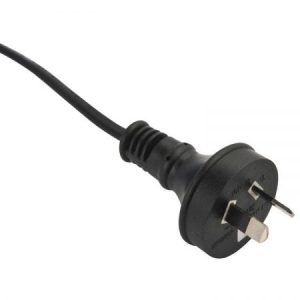
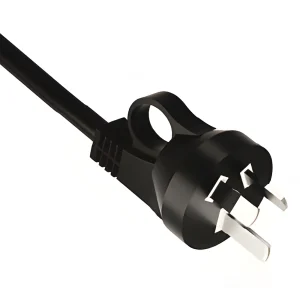
Australian power supply cords and plugs are SAA certified and manufactured in compliance with AS/NZS 3112 standards for AC power applications in Australia. Also known as Australian mains power leads,In Australia, the electricity supplied by standard wall outlets is referred to as the “mains power system,” which is why Australian power cords are commonly called mains leads, mains cords, mains cables, line cords, or mains power leads.



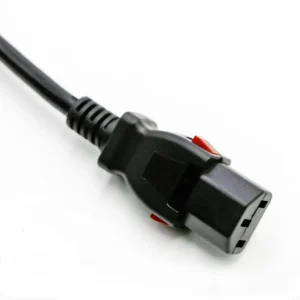
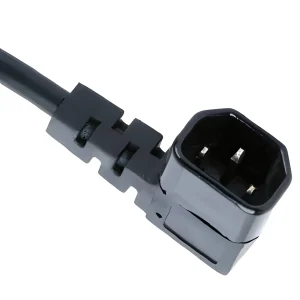
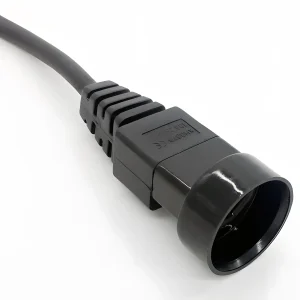
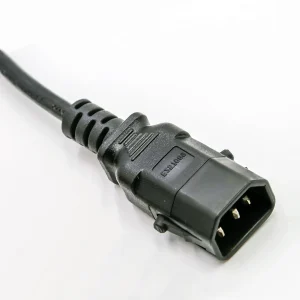
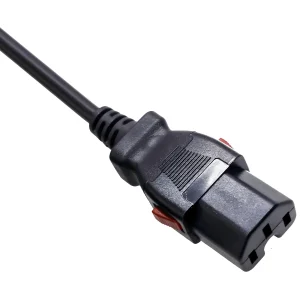
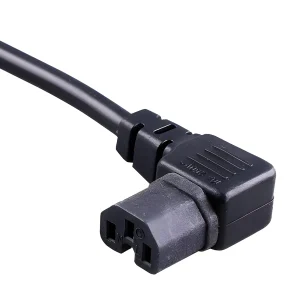
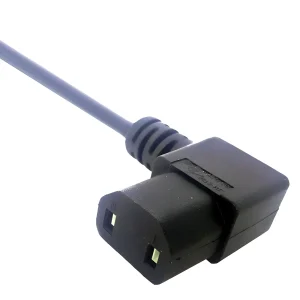
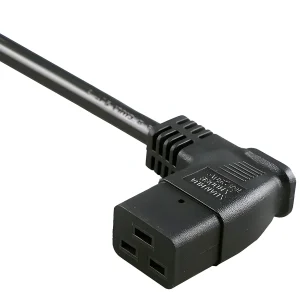
IEC 60320 Connectors
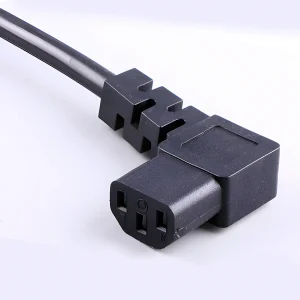
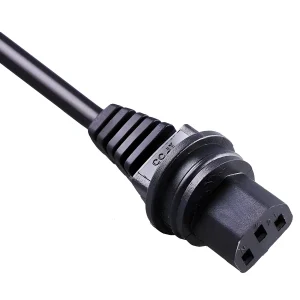
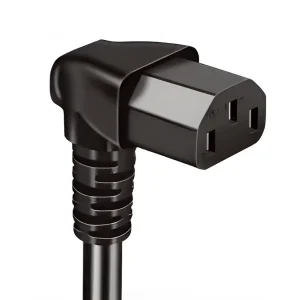
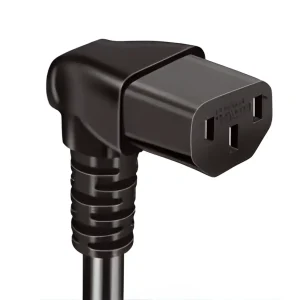
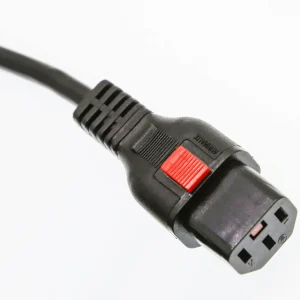
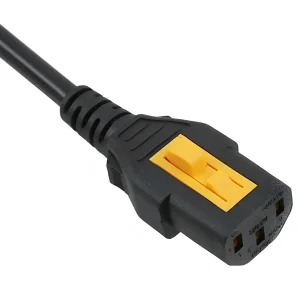
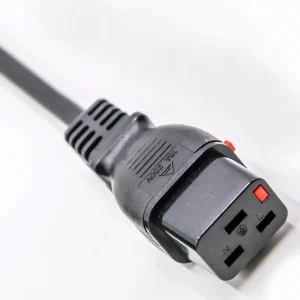
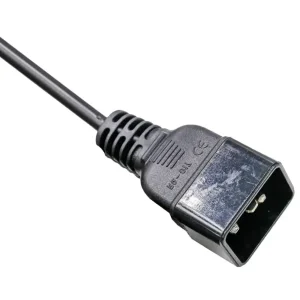
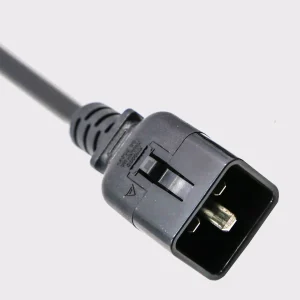
IEC 60320 power cables come in normal and high-temperature variants, as well as various rated currents. The connectors have slightly different shapes to ensure that it is not possible to substitute a cable with a lower temperature or current rating, but that it is possible to use an overrated cable. Cords also have different types of exterior jackets available to accommodate environmental variables such as moisture, temperature, oils, sunlight, flexibility, and heavy wear. For example, a heating appliance may come with a cord designed to withstand accidental contact with heated surfaces.






➡️Extension Cords
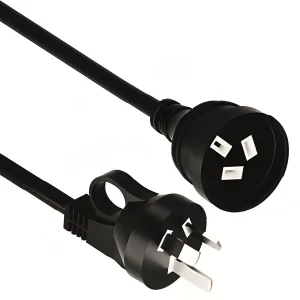
Our Australian Standard Extension Cord (also known as a power extension lead or power board) is your ultimate heavy-duty power solution. Designed for the demanding Australian environment, this 3-pin plug cord is SAA certified to meet the strict AS/NZS 3112 standard, guaranteeing safety and reliability. We specialize in custom-length power cables and a variety of colour options, providing a tailored power supply for your home, office, job site, or event.


➡️Flexible Cable
Australian Power Cord Wire contains literally hundreds of SAA approved AU, AS/NZ styles we offer, below only listed the most popular versions. Please select desired wire style below or call if you are interested:
Australia PVC Cable: V-75 H3VV-F、H03VVHH2-F 250/250V、V-75 H5VV-F、H05VVHH2-F 250/440V、Heavy Duty V-75 0.6/1KV
Australia Rubber Cable: H05RN-F、H05RR-F、H07RN-F
Cableso proudly offers a huge variety of 0.5mm2 through 4mm2 Australia SAA bulk power cord wire. All our AU, AS/NZ bulk flexible wire products, are extruded in a house in high volume and we offer the most competitively priced high-quality Australia / New Zealand portable cable anywhere. We offer 2, 3, 4 and 5 conductor 300V and 600V styles.


